
Shareholders Equity Definition, Formula, Calculate

Things like brand reputation, customer loyalty, or future potential don’t show up in the numbers. And in some industries, those can be worth more than the assets on the books. The additional paid-in capital is taken into consideration only when an investor purchases shares directly from the company. It refers to the stocks that have been sold to stockholders but have not been repurchased by the company. It includes stocks that have been issued to company officers, public investors, company insiders and the like.
Current Portion of Long-Term Debt

Total assets are the total of current assets, such as marketable securities and prepayments, and long-term assets, such as machinery and fixtures. Total liabilities are obtained by adding current liabilities and long-term liabilities. Investors are wary of companies with negative shareholder equity since such companies are considered risky to invest in, and shareholders may not get a return on their investment if the condition persists. For example, if the assets are liquidated in a negative shareholder equity situation, all assets will be insufficient to pay all of the debt, and shareholders will walk away with nothing. Shareholders’ equity can help to compare the total amount invested in the company versus the returns generated by the company during a specific period.
Positive vs. negative shareholder equity
- It is important to note that there are different components of shareholder equity.
- Net income is the total revenue minus expenses and taxes that a company generates during a specific period.
- Treasury Stock (TS) is stock that the company has repurchased from the open market and holds in its treasury.
- Please read the OpenMarkets and AlpacaTerms and Conditions, Disclosures and Customer Agreement documents before applying for a Pearler Shares account.
- The following examples feature the shareholders’ equity statement and show how to calculate shareholders’ equity with respect to all the above-mentioned components.
- By calculating shareholder equity for both companies, we can determine their respective financial positions.
In other words, preferred stockholders receive their dividends before the common stockholders receive theirs. If the corporation does not declare and pay the dividends to preferred stock, there cannot be a dividend on the common stock. In return for these preferences, the preferred stockholders usually give up the right to share in the corporation’s earnings that are in excess of their stated dividends.
Appropriations or Restrictions of Retained Earnings

FAQs About Shareholder Equity1) What is the difference between shareholder equity and net worth? – Though often used interchangeably, shareholder equity is more accurately defined as a company’s residual interest in its assets after deducting all liabilities. Net worth refers to the total value of a company’s assets minus its debts.2) Does negative shareholder equity indicate bankruptcy?
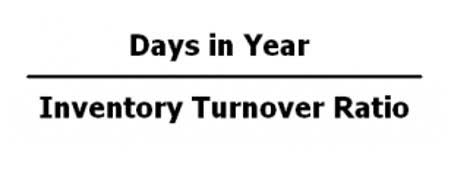
There https://dna-dev.net/about-salt-lake-city-quickbooks-training-salt-lake/ is a specific formula that can be utilised to know how to calculate shareholders’ equity. Nonetheless, a company’s shareholder value should not be confused with its liquidation value. It is because, during liquidation, a company’s physical asset values are reduced, and there are other extraordinary circumstances that are taken into account.

Retained earnings calculation example
- Shareholder equity (SE), also known as shareholders’ equity, stockholders’ equity, or owners’ equity, represents the residual value of a company’s assets after subtracting all its liabilities.
- The certificate would indicate the type of stock (common, preferred), any restrictions pertaining to the sale of the stock, the number of shares, the par value, etc.
- In recent years, more companies have been increasingly inclined to participate in share buyback programs, rather than issuing dividends.
- In these types of scenarios, the management team’s decision to add more to its cash reserves causes its cash balance to accumulate.
- Outstanding share capital can be assessed for equity shares as well as preference shares.
Today, the larger corporations with many shareholders are likely to use electronic records instead of issuing the paper stock certificates. For instance, if a corporation exchanges 1,000 of its publicly-traded shares of common stock for 40 acres of land, the fair market value of the stock is likely to be more clear and objective. (The stock statement of stockholders equity might trade daily while similar parcels of land in the area may sell once every few years.) In other situations, the common stock might rarely trade while the value of a service received is well-established. The book value of one share of cumulative preferred stock is its call price plus any dividends in arrears. If a 10% cumulative preferred stock having a par value of $100 has a call price of $110, and the corporation has two years of omitted dividends, the book value per share of this preferred stock is $130.
- This section delves deeper into the various components that make up SE, including common stock, preferred stock, treasury shares, retained earnings, and unrealized gains/losses.
- When it comes to dividends and liquidation, the owners of preferred stock have preferential treatment over the owners of common stock.
- They are subtracted from cumulative retained earnings and current-year net income to arrive at the retained earnings for the current year.
- Any amount remaining (or exceeding) is added to (deducted from) retained earnings.
- The company uses this account when it reports sales of goods, generally under cost of goods sold in the income statement.
Negative equity is an indicator that a business is poorly run and has QuickBooks no reserves to protect it, and so is at risk of bankruptcy. From another perspective, shareholders’ equity can be denoted as the amount the company has left to pay back its shareholders after it has paid its debts and liabilities. Mathematically, this is the company’s total assets minus the total liabilities. Usually financial statements refer to the balance sheet, income statement, statement of comprehensive income, statement of cash flows, and statement of stockholders’ equity. To illustrate how preferred stock works, let’s assume a corporation has issued preferred stock with a stated annual dividend of $9 per year.


